Trauma strikes without warning, leaving not just emotional scars but also hazardous physical remnants that demand immediate attention. Whether it’s a sudden accident, an unattended death, or a crime scene in the heart of Dallas, the aftermath can overwhelm even the strongest individuals. As a resident of this vibrant city—known for its bustling Uptown neighborhoods and sprawling suburbs like Plano—you might find yourself grappling with biohazards that pose serious health risks. That’s where professional intervention becomes crucial.
At Dallas Biohazard Cleanup, we understand the gravity of these situations. With years of experience serving the Dallas-Fort Worth area, our team is dedicated to restoring safety and peace of mind. In this comprehensive guide, we’ll walk you through what to do after trauma, offering practical advice tailored to Dallas locals. From initial response to full cleanup, we’ll equip you with the knowledge to navigate this challenging time effectively.
Immediate Steps to Take After a Traumatic Event
The moments following a traumatic incident are critical. Your priority should be safety—for yourself, loved ones, and the community. Rushing into action without proper precautions can lead to exposure to dangerous pathogens, so proceed with caution.
Ensure Personal and Scene Safety
First and foremost, assess the situation. If there’s an active threat, evacuate the area immediately. In Dallas’s dense urban environments, like the lively streets of Lower Greenville, quick evacuation can prevent further harm. Do not touch bodily fluids, sharp objects, or contaminated materials. Wear protective gear if available, such as gloves and masks, to avoid direct contact.
If the trauma involves blood or decomposition, recognize that these are biohazards capable of transmitting diseases like hepatitis or HIV. For specialized handling in such cases, consider reaching out for crime scene cleanup services that adhere to OSHA standards.
Contact Emergency Services and Authorities
Dial 911 without delay if there’s any immediate danger or if the incident involves a crime or unattended death. In Dallas, local law enforcement, such as the Dallas Police Department, will secure the scene and guide you on next steps. Once authorities have responded, inform them about any biohazard concerns to ensure proper protocols are followed.
After the initial response, document everything. Take photos from a safe distance (without disturbing the scene) and note details for insurance or legal purposes. This documentation is invaluable, especially in high-traffic areas like Arlington, where incidents might draw public attention.
Understanding Biohazards and Their Risks in Dallas Homes
Biohazards aren’t just a buzzword—they’re real threats that can linger in your home or property long after the event. In the humid Texas climate, bacteria and mold can proliferate quickly if not addressed, turning a traumatic scene into a health hazard.
Common Types of Biohazards After Trauma
Trauma often results in blood spills, tissue matter, or even chemical residues from accidents. An unattended death cleanup scenario, for instance, can lead to decomposition fluids that seep into carpets and walls, releasing odors and toxins. In Dallas’s older homes in areas like Highland Park, porous materials like wood or fabric absorb these contaminants, making DIY cleanup nearly impossible and risky.
Other biohazards include animal waste from distressed pets during the event or hoarding situations exacerbated by trauma. Exposure risks include respiratory issues, infections, and psychological distress from the lingering smells and sights.
Health and Legal Implications
Ignoring biohazards can violate local health codes in Dallas County. The Texas Department of State Health Services emphasizes professional remediation to prevent cross-contamination. Legally, property owners may face liability if hazards aren’t mitigated, particularly in rental properties common in Uptown Dallas.
For those dealing with hoarding-related trauma, our hoarding cleanup services provide discreet, thorough restoration, helping families in Plano reclaim their spaces safely.
Step-by-Step Guide to Biohazard Cleanup in Dallas
Once the scene is secured, the cleanup process begins. While professionals handle the heavy lifting, understanding the steps empowers you to make informed decisions.
Step 1: Isolate and Ventilate the Area
Seal off the affected space to prevent spread. Use plastic sheeting and tape for doorways, and open windows for ventilation if safe. In Dallas’s variable weather, this might mean using fans to circulate air without dispersing particles. Avoid using HVAC systems, as they can spread contaminants throughout your home.
Practical tip: Place warning signs to keep family and pets away. If you’re in a multi-unit building in Lower Greenville, notify neighbors and management to coordinate access.
Step 2: Gather Essential Supplies for Initial Containment
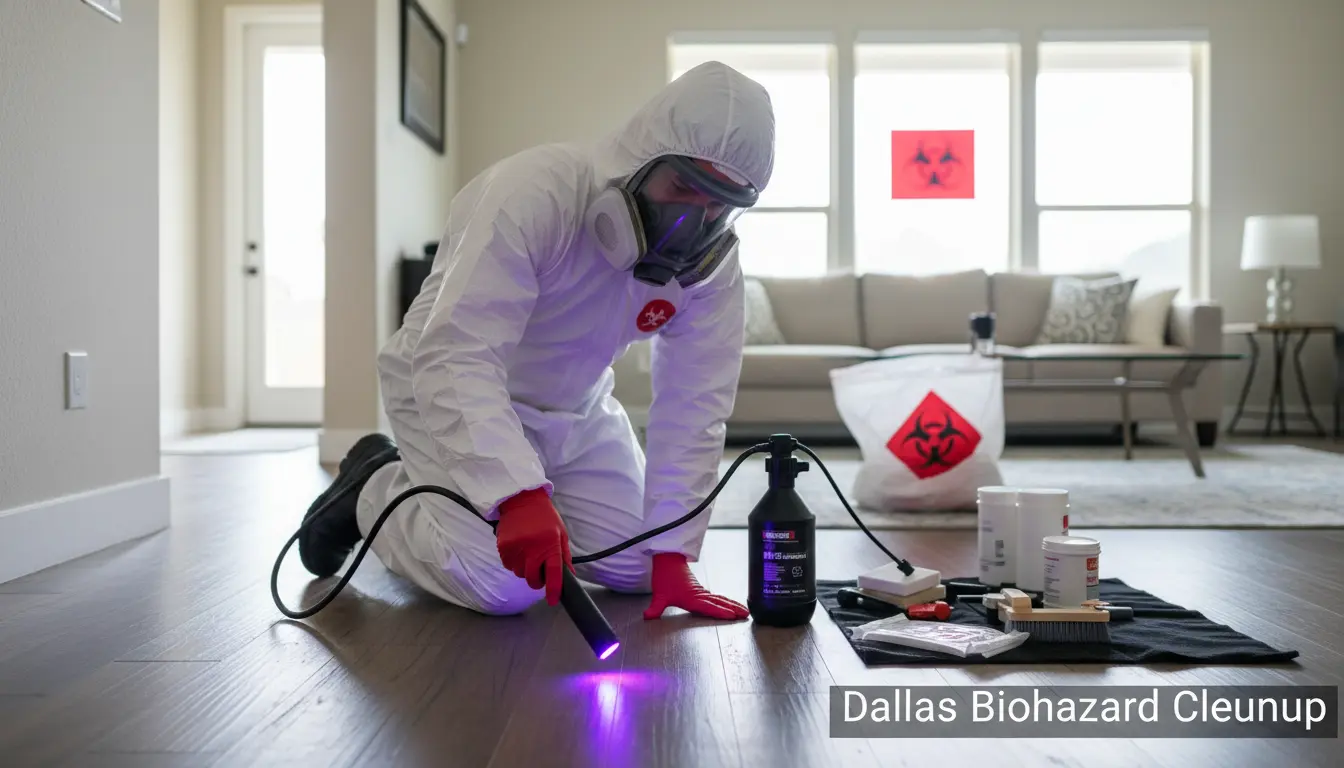
For minor incidents, basic supplies like absorbent materials, disinfectants (EPA-approved for bloodborne pathogens), and heavy-duty bags can help contain the mess temporarily. However, for anything involving trauma, this is not a substitute for pros.
Actionable advice: Soak up liquids with cat litter or commercial absorbents before bagging. Double-bag waste and label it as biohazardous. In Dallas, dispose of it at designated facilities like the city’s waste management sites—never in regular trash.
Step 3: Engage Professional Biohazard Cleanup Services
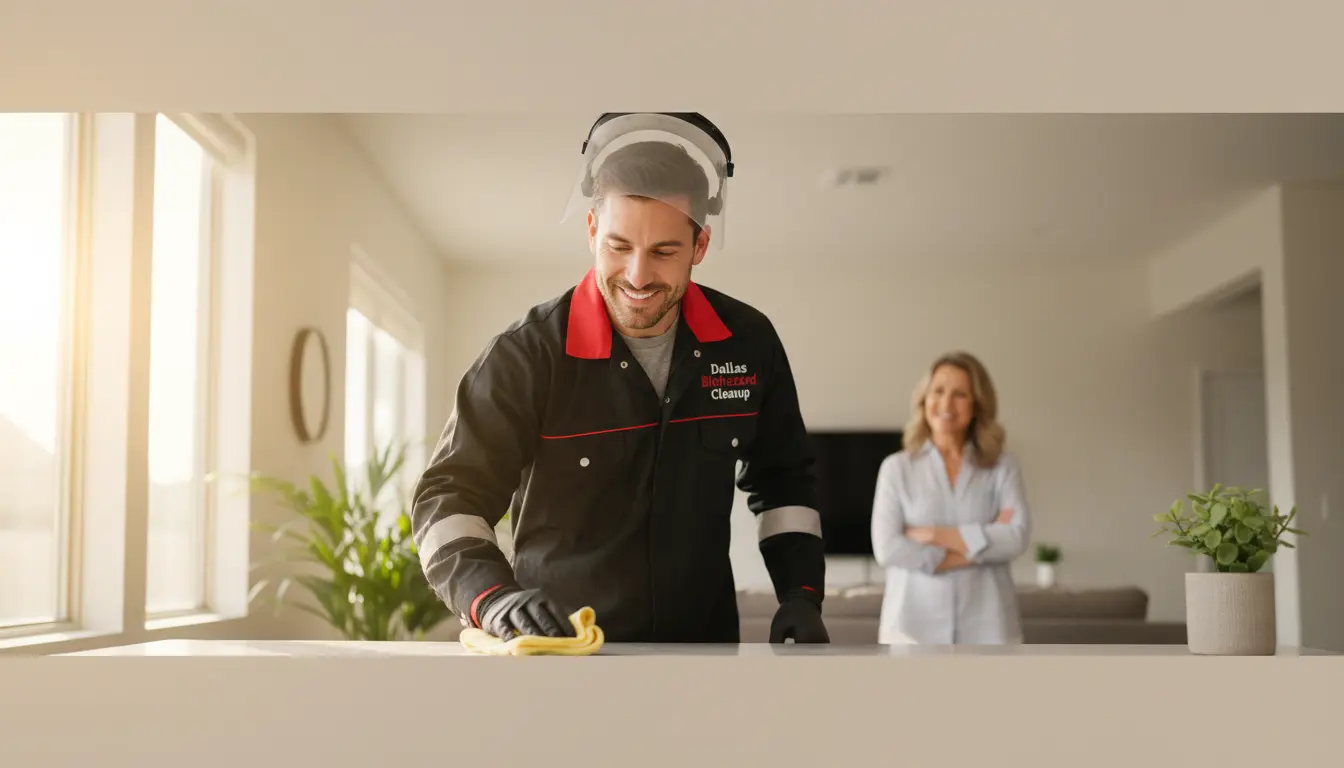
This is where expertise shines. Dallas Biohazard Cleanup specializes in trauma scenes, using advanced tools like HEPA vacuums, ozone generators, and enzymatic cleaners to eliminate hazards at the molecular level.
Why choose us? We’re IICRC-certified, available 24/7, and serve all of Dallas, including biohazard cleanup in Arlington. Our process includes:
- Full assessment and containment
- Safe removal of biohazards
- Deep disinfection and deodorization
- Final sanitization and certification
For violent incidents, our homicide scene cleanup team works sensitively with families and authorities, ensuring compassion alongside efficiency.
Step 4: Address Emotional and Structural Aftermath
Cleanup isn’t just physical. Seek counseling through local Dallas resources like the Victim Services Division of the DPD. Structurally, inspect for damage—trauma scenes might require carpet replacement or wall repairs, especially in flood-prone areas near the Trinity River.
Tip: Insurance often covers professional cleanup; contact your provider early. In Plano’s suburban homes, we often coordinate with restoration contractors for seamless recovery.
Local Considerations for Dallas Residents
Dallas’s unique landscape influences trauma response. High temperatures accelerate decomposition, while urban density in Uptown means quicker professional access is vital. For rural edges like parts of Arlington, our mobile teams ensure rapid deployment.
If animal involvement occurred, such as during a hoarding crisis, our animal waste removal services target pathogens from rodents or strays, common in Dallas’s green spaces.
In historic districts like Highland Park, we prioritize preserving property aesthetics during cleanup, using non-abrasive methods to maintain value.
FAQ: Common Questions About Post-Trauma Cleanup in Dallas
1. How soon should I call for biohazard cleanup after trauma?
Immediately after authorities clear the scene—delaying can worsen contamination. Dallas Biohazard Cleanup responds within hours to minimize risks.
2. Is DIY biohazard cleanup safe in Dallas homes?
No, it’s not recommended. Professionals use specialized equipment to handle pathogens safely, avoiding health code violations common in Texas.
3. What does professional trauma cleanup cost in the Dallas area?
Costs vary by scope but are often covered by insurance. We provide free estimates—call (469) 848-8812 for a quote tailored to your situation in areas like Lower Greenville or Plano.
4. How long does the cleanup process take?
Typically 1-5 days, depending on the scene’s size. Our team in Uptown Dallas can start same-day for urgent cases.
5. Can you help with emotional support during cleanup?
While we focus on physical restoration, we connect clients with local Dallas grief resources and handle the scene with utmost sensitivity.
Conclusion: Take the First Step Toward Healing
Navigating the aftermath of trauma in Dallas is daunting, but you’re not alone. By following these steps—from securing the scene to enlisting expert biohazard cleanup in Plano—you can restore safety and begin healing. Dallas Biohazard Cleanup is here to support you every step of the way, with compassionate, reliable service that prioritizes your well-being.
Don’t let biohazards prolong your pain. Contact us today at (469) 848-8812 for a confidential consultation. Let us handle the cleanup so you can focus on recovery—because in Dallas, every family deserves a fresh start.