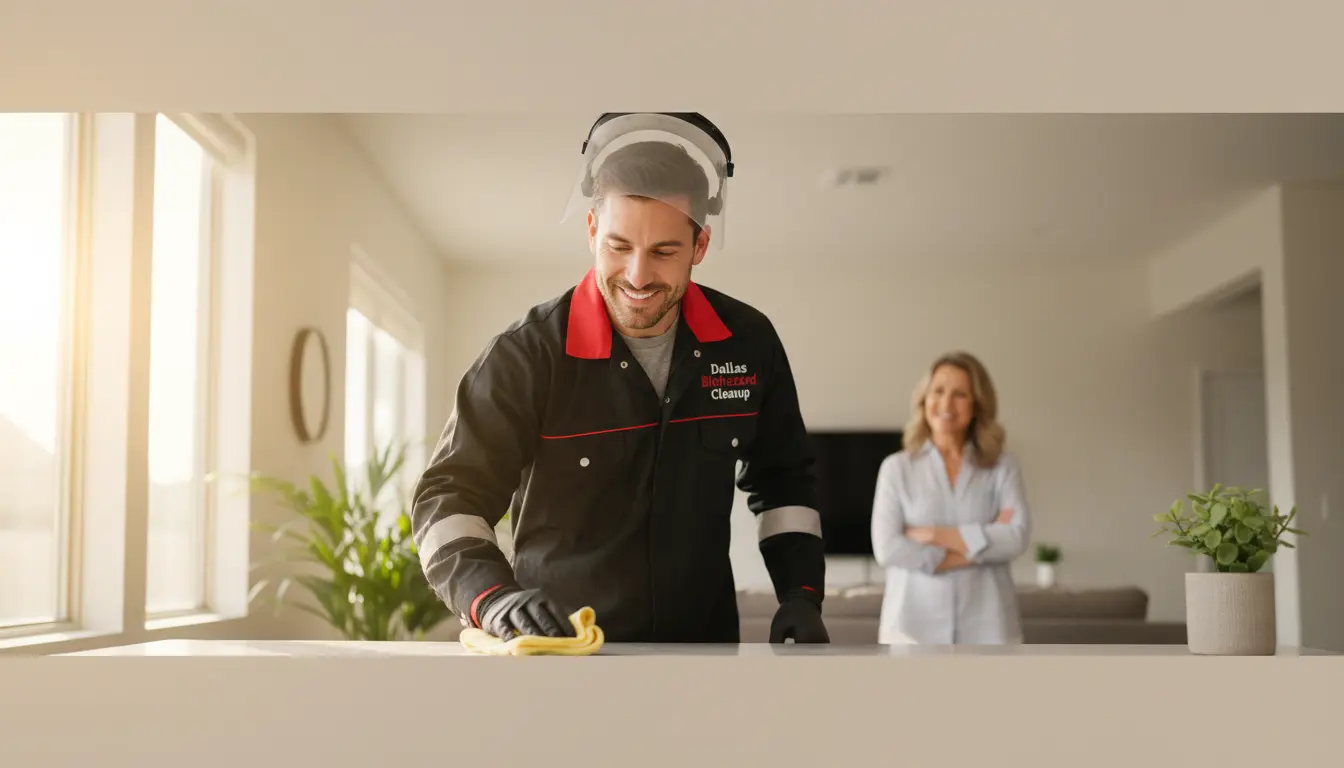
It’s a sunny afternoon in the Bishop Arts District, and a sense of unease settles over the residents of a quaint, tree-lined street. A call to the police has just been made, reporting a traumatic incident at one of the homes. As the authorities arrive, they realize that the situation requires more than just standard law enforcement procedures – it demands professional biohazard cleanup. In such scenarios, residents of the Bishop Arts District need to be aware of the risks associated with biohazard exposure and the importance of proper remediation to restore their properties to a safe, pathogen-free state.
The primary concern in biohazard cleanup near the Bishop Arts District is the potential for unseen pathogen risks. Biological hazards can progress rapidly in the Dallas climate, with extreme summer heat accelerating biological decay and pathogen growth. Standard cleaning methods are insufficient for dealing with biohazards, as they may spread contaminants and increase the risk of cross-contamination. This is where professional biohazard remediation services, such as those provided by Dallas Biohazard Cleanup, become crucial. With their expertise and specialized equipment, they can ensure that affected areas are thoroughly sanitized and safe for future occupants.
Dallas Biohazard Cleanup is the premier service provider in the area, offering discreet and authoritative biohazard remediation. Their team is equipped to handle a wide range of biohazard situations, from crime scene cleanup to unattended death cleanup and hoarding remediation. By choosing a professional service, residents can ensure that their properties are restored to a safe and healthy state, minimizing the risk of legal liabilities and protecting future occupants from infectious diseases.
Technical Process of Biohazard Cleanup
The technical process of biohazard cleanup involves several critical steps, starting with a thorough hazard assessment to identify potential risks and contaminants. This is followed by the establishment of containment zones to prevent cross-contamination and the removal of biological materials. The area is then subjected to multi-stage sanitization, utilizing tools such as HEPA air scrubbers, hydroxyl generators, and electrostatic sprayers to eradicate microscopic pathogens.
ATP testing is conducted to verify the effectiveness of the sanitization process, ensuring that the area is safe for future use. Local variables, such as environmental conditions and ambient heat in Dallas, are taken into account to dictate the chosen remediation method and timeline. For instance, the use of enzymatic sanitization may be preferred in certain situations to break down proteins and other organic matter effectively.
Data Comparison
A comparison of professional biohazard remediation and standard janitorial or DIY cleaning highlights the importance of choosing the right service. The table below illustrates the key differences:
| Feature/Metric | Professional Remediation | Standard Janitorial/DIY |
|---|---|---|
| Pathogen Elimination | 99.99% elimination of pathogens, including bacteria, viruses, and fungi | Limited to visible stain removal, with potential for pathogen survival |
| Legal/Waste Compliance | Full compliance with OSHA and EPA regulations for biohazardous waste disposal | Potential for non-compliance, leading to legal and health risks |
| Cross-Contamination Risk | Minimized through use of containment zones and proper PPE | High risk of cross-contamination without proper training and equipment |
Source: OSHA Bloodborne Pathogens Standard
Expert Insights
Advanced professional tips for biohazard remediation include assessing sub-flooring for fluid penetration to prevent hidden contaminants and understanding vector control to prevent pest infestations. Common mistakes property owners make include using household bleach on blood, which can actually set the stain and make it harder to clean, and ignoring porous materials that may harbor pathogens.
Real consequences of such mistakes can include structural damage, returning odors, and legal liability. For example, the use of bleach on blood can lead to the formation of toxic compounds, while ignoring porous materials can result in the spread of pathogens and the need for more extensive remediation.
Pricing Structure
The pricing structure for biohazard cleanup services can vary based on several factors, including the depth of biological fluid penetration, the amount of regulated medical waste disposal required, and the need for structural tear-out. Services may be priced per room, on an hourly basis, or according to fixed rates based on bio-load tiers.
Factors that influence cost include the extent of the contamination, the type of surfaces affected, and the requirement for specialized equipment or PPE. For instance, a situation involving a large amount of biological fluid penetration into porous materials may require more extensive remediation, including the removal and disposal of affected materials, thereby increasing the cost.
Safety and Standards
Dallas Biohazard Cleanup adheres to specific certifications, such as ABRA and IICRC, and follows strict safety protocols, including OSHA compliance and the use of EPA-registered hospital-grade disinfectants. The practical importance of these standards lies in their ability to protect future occupants from infectious diseases and legal liabilities, ensuring that properties are restored to a safe and healthy state.
FAQs
What is the typical duration of a biohazard cleanup process?
The duration of a biohazard cleanup process can vary significantly depending on the extent of the contamination, the type of surfaces affected, and the complexity of the remediation required. In some cases, the process may be completed within a few hours, while more complex situations could take several days or even weeks to resolve. It’s essential to work with a professional service that can provide a detailed assessment and timeline for the cleanup process.
Is biohazard cleanup covered by insurance?
In many cases, biohazard cleanup is covered by insurance, depending on the policy and the nature of the incident. It’s crucial to review your insurance policy and consult with your provider to understand what is covered and what is not. Professional biohazard remediation services, like Dallas Biohazard Cleanup, often work directly with insurance companies to facilitate the claims process and ensure that clients receive the coverage they are entitled to.
How do I choose a reliable biohazard cleanup service?
Choosing a reliable biohazard cleanup service involves several key considerations, including their experience, certifications, and reputation. Look for services that are certified by reputable organizations, such as ABRA or IICRC, and have a proven track record of successfully completing biohazard remediation projects. It’s also essential to ensure that the service follows strict safety protocols and uses proper equipment and disinfectants to minimize risks.
What are the risks of DIY biohazard cleanup?
The risks of DIY biohazard cleanup are significant and can include the spread of pathogens, cross-contamination, and legal liabilities. Without proper training, equipment, and protective gear, individuals attempting DIY cleanup can expose themselves and others to harmful biological agents, leading to serious health consequences. Furthermore, improper disposal of biohazardous materials can result in legal and environmental issues.
Conclusion
In conclusion, biohazard cleanup near the Bishop Arts District is a critical process that requires professional expertise to ensure the safe and effective remediation of biological hazards. By understanding the risks associated with biohazard exposure and the importance of proper remediation, residents can protect themselves, their properties, and their communities. Dallas Biohazard Cleanup stands as a compassionate, highly-trained, and reliable option for those in need of biohazard remediation services in the Bishop Arts District and surrounding areas.
For more information on biohazard cleanup and related services, please visit our website or consult our blog for insightful articles and guides. If you are in need of immediate assistance, please do not hesitate to contact us directly.
Remember, when it comes to biohazard cleanup, it’s not just about cleaning – it’s about restoring environments to a safe, pathogen-free state, protecting health, and preventing legal liabilities. Choose a professional service that prioritizes your safety and well-being, and ensure that your property is in good hands.