Mold Inspection & Assessment
We evaluate visible growth, moisture conditions, affected building materials, and areas where hidden mold may be present. Testing may be considered when it provides useful information for the project.
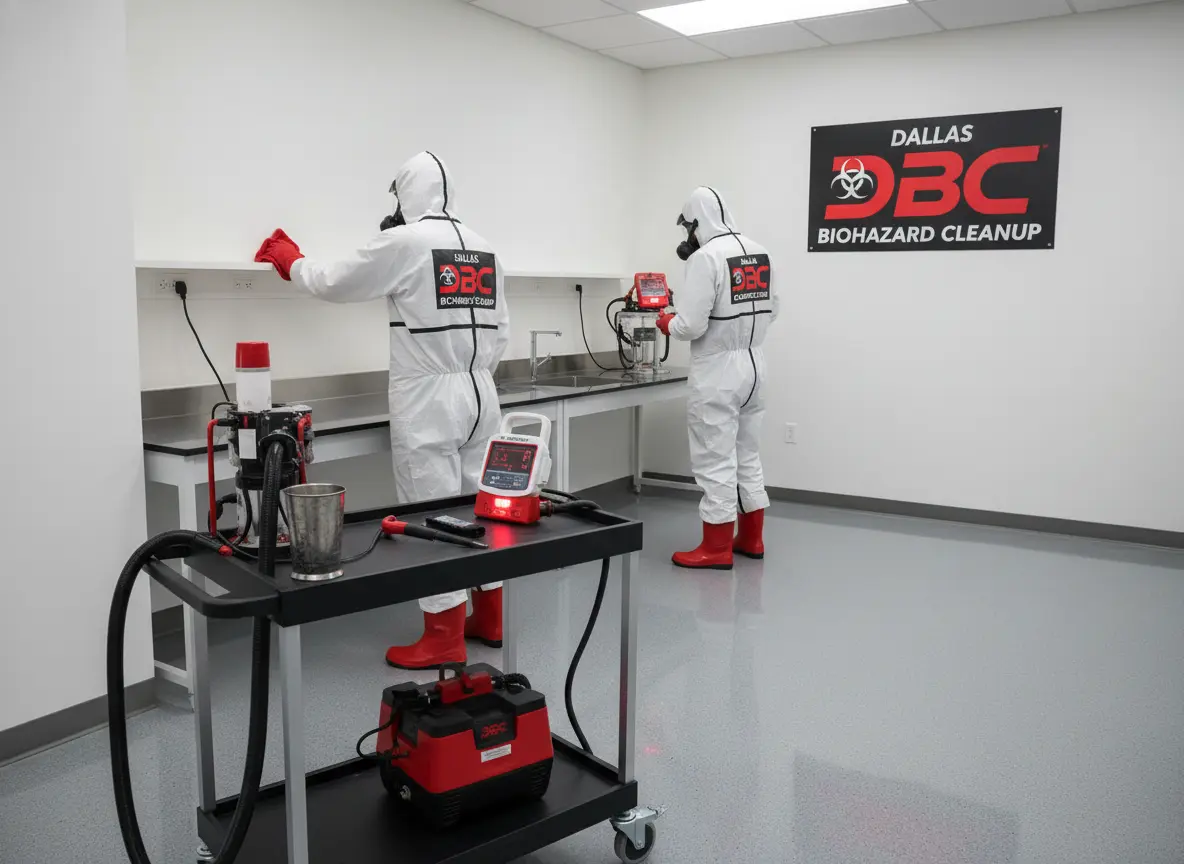
Facing toxic mold growth in your Dallas home or business? Mold can develop quickly after a roof leak, plumbing problem, flooding event, HVAC issue, or prolonged indoor humidity. Once growth becomes established, simply wiping the visible surface may not address contamination that has spread into porous materials or hidden spaces.
Dallas Biohazard Cleanup provides professional mold biohazard remediation near you in Dallas, with services designed around containment, removal, cleaning, disinfection, moisture control, and proper handling of affected materials. We serve residential and commercial properties across Dallas, including Uptown, Oak Lawn, Deep Ellum, Highland Park, and Lakewood.
Musty odors, visible mold, recurring moisture, discoloration, or water-damaged materials are all reasons to have the property assessed. If mold appeared after a sewage incident, our sewer backup cleaning service can address the contamination source before mold remediation begins.
Effective mold remediation is not just about removing what you can see. A professional cleanup plan considers where moisture came from, how far contamination has spread, which materials can be cleaned, and which materials may need controlled removal.
We evaluate visible growth, moisture conditions, affected building materials, and areas where hidden mold may be present. Testing may be considered when it provides useful information for the project.
Affected areas can be isolated to help limit the movement of mold particles into clean portions of the property while contaminated materials are addressed using appropriate procedures.
Professional cleaning methods can include HEPA filtration and vacuuming, detailed surface cleaning, and appropriate treatment of salvageable materials depending on the condition of the property.
Mold can develop in attics, wall cavities, crawlspaces, around HVAC components, and other areas where moisture is difficult to detect. These locations require careful assessment before remediation.
Heavily affected drywall, insulation, carpet, or other porous materials may not be suitable for cleaning. When removal is necessary, materials are handled in a controlled manner.
Mold can return when the underlying moisture problem remains. We identify contributing conditions and recommend practical steps such as leak repair, improved ventilation, and humidity control.
When mold contamination overlaps with another biohazard situation, the cleanup plan may need to address multiple sources at once. Our disinfection and sanitization services can be incorporated when appropriate for the affected property.
Mold is not always immediately visible. It may grow behind drywall, beneath flooring, around plumbing penetrations, inside damp insulation, or in poorly ventilated areas. Paying attention to changes in the property can help you respond before the problem becomes more extensive.
Dallas properties can experience changing humidity and severe weather conditions throughout the year. After significant water intrusion, addressing the moisture source promptly is one of the most important steps in reducing the chance of recurring mold growth.
Every mold project is different. The size of the affected area, type of materials involved, moisture source, accessibility, and extent of contamination all influence the remediation approach. A typical professional process may include the following steps.
If the mold problem followed a traumatic or contaminated event, proper containment and worker safety become especially important. Our article about why OSHA rules matter in biohazard cleanup projects explains the importance of appropriate safety practices during specialized remediation work.
Mold cleanup can be stressful, especially when you are unsure how far the contamination has spread or whether affected materials can be saved. Our goal is to make the process straightforward, professional, and focused on the actual condition of your property.
Water damage and mold-related emergencies do not always happen during business hours. Our team is available around the clock for urgent situations throughout Dallas.
Professional remediation can require containment materials, HEPA filtration, specialized cleaning equipment, moisture detection tools, and appropriate protective equipment.
We understand the local property conditions that can contribute to mold, including storm-related water intrusion, plumbing leaks, humidity, and moisture accumulation.
We explain what we find, which areas are affected, what work is recommended, and what property owners should do to address the source of moisture.
If mold growth is widespread, keeps returning, has developed after major water damage, or may have affected hidden building materials, a specialized remediation company is a better choice than attempting extensive cleanup with household products.
General cleaning may remove visible surface staining, but it does not necessarily address moisture sources, contaminated porous materials, hidden growth, or the potential spread of mold particles during removal. Professional remediation focuses on the complete affected area and the conditions that allowed the mold to develop.
Dallas Biohazard Cleanup provides mold biohazard remediation for homes, apartments, rental properties, offices, and commercial buildings throughout the Dallas area. We also serve surrounding communities and neighborhoods including Uptown, Oak Lawn, Deep Ellum, Highland Park, and Lakewood.
For urgent mold concerns, call (469) 848-8812 to discuss the situation and determine the next appropriate step.
If you are also dealing with insurance questions after a contaminated property event, our guide on insurance coverage for biohazard and crime scene cleanup costs provides additional information that may help you prepare for the claims process.
If you have any problem regarding Mold Biohazard Remediation and Biohazard Cleanup, please contact us or call at (469) 848-8812.
Copyright © October, 2026 Dallas Biohazard Cleanup. All Rights Reserved . Sitemap